

V recently updated its AI policy, making it clear that, although the use of AI tools to enhance development efficiency is not a policy priority, developers still need to explain to the player if the game uses generating AI technology in art, sound, narrative or localization. As reported by GameDiscoverCo, a team that uses only “AI efficiency tools”, such as code assistants, and ultimately delivers without generating AI material may not have additional disclosure.
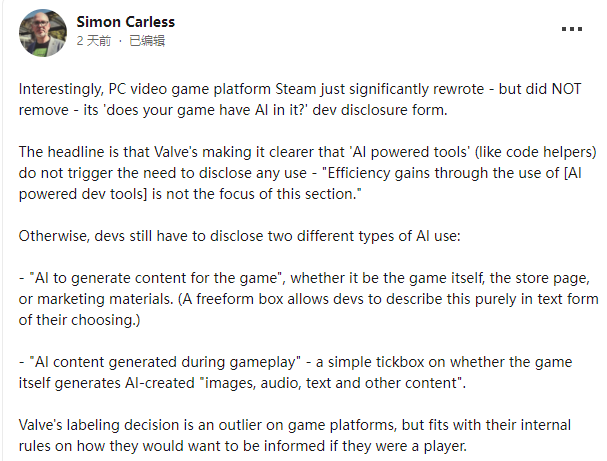
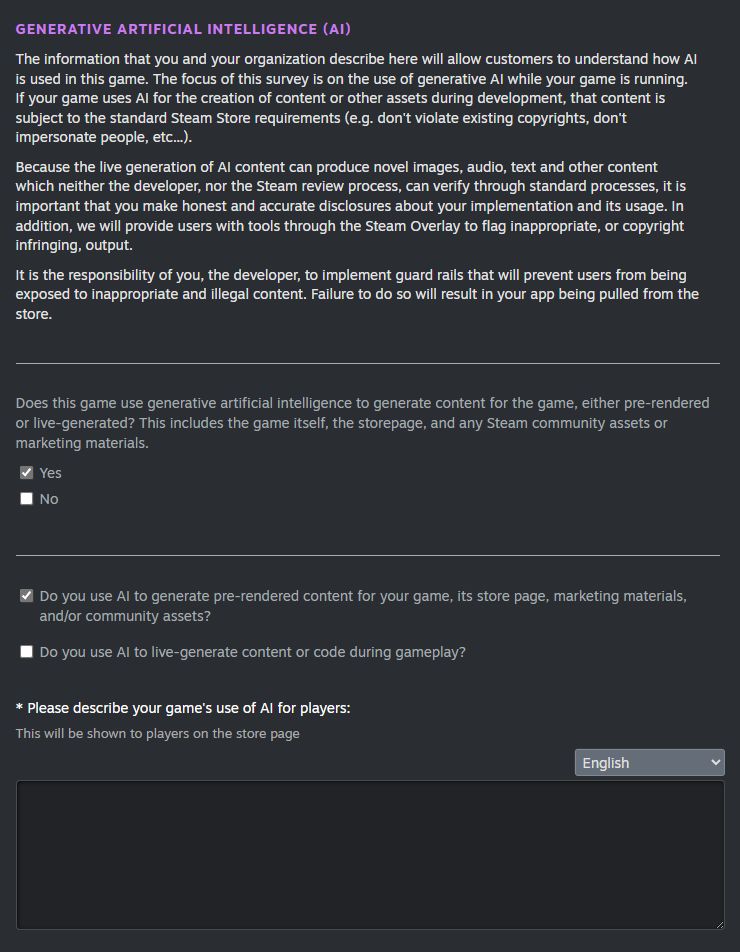
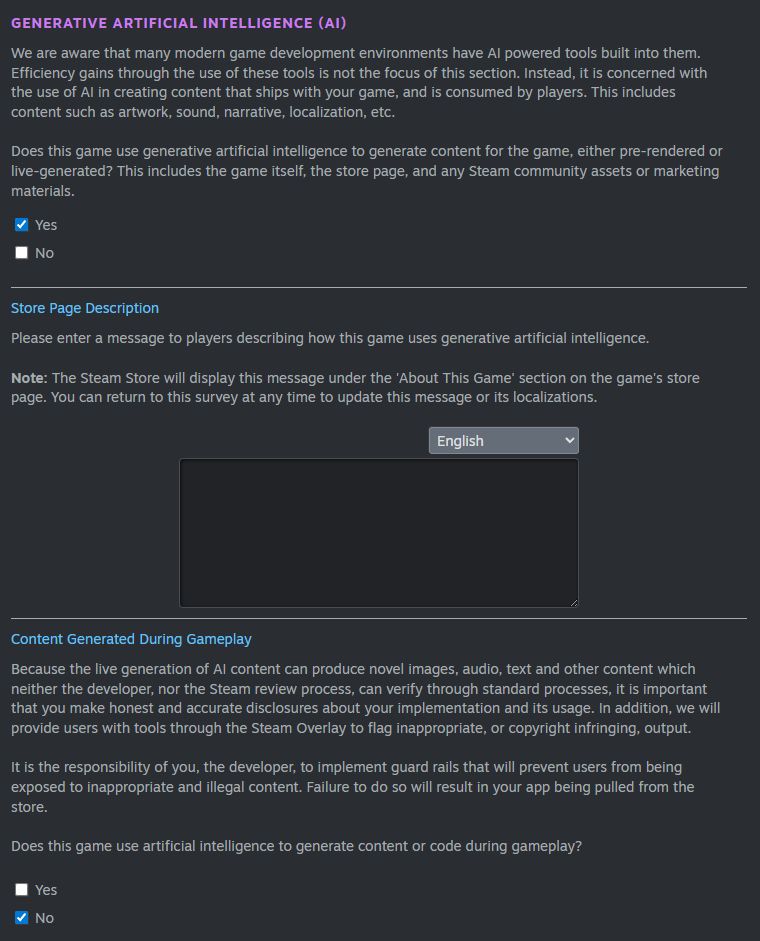
The developer’s disclosure page is now clear: “We know that many modern game development environments have built-in AI efficiency tools. At the heart of this section’s policy is not a focus on improving efficiency through such tools, but rather a focus on the use of AI to generate the final content of the game (including the parts of art, audio, narrative, localization, etc. that are directly accessible to players).” Developer needs to tick “Yes/No” on “Whether to use generated AI to create game content (including pre-referral or real-time generation), shop pages and Steam community material or marketing material”.
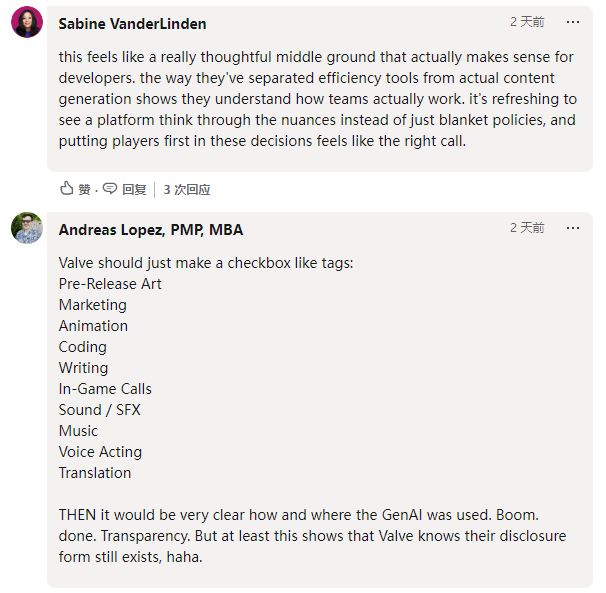
According to commentators: “This seems to be a well-thought-out programme that takes into account the real needs of developers. V separates efficiency tools from substantive production, demonstrating that they understand the actual way the team works. It is a welcome development that the platform is able to reflect in depth on policy details rather than one-size-fits-all, and to put players first in decision-making.”
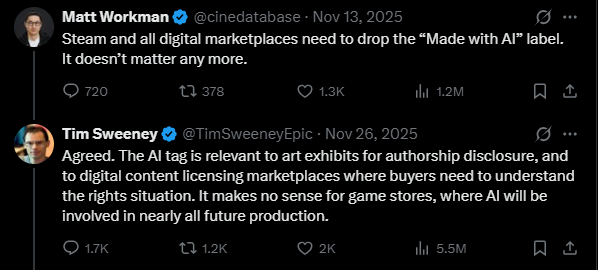
At the end of last year, Chief Executive Officer Epic Games Tim Sweeney criticized V for its policy of requiring disclosure of AIGC, stating that “it is irrelevant that all digital markets, such as Steam, should eliminate the `AI production’ label”.
It is worth mentioning that Steam has also recently surpassed 42 million online users to update historical records. According to the Wccftech analysis, the PC distribution platform has been accompanied by an average number of online users that has more than doubled compared to 2020 and has been very innovative in recent years (previously recorded at 41.6 million in October 2025). Data analysis shows that: “The pre-disease Steam platform grew at an annual rate of only 4.5 per cent, which rose sharply to 31.5 per cent during the embargo period, and then entered a period of steady growth, with the current annual growth rate at 12.6 per cent to 13.9 per cent.” Last month was also the highest-income month in the history of Steam, largely driven by recent popular works such as Arc Raiders and independent games such as Peak. Steam has continued to improve the quality of its promotional activities and often competes with the deep discounts on other platforms. The expansion of Steam Deck’s portable mainframe also contributed to the growth, which enabled many players who wished to benefit from the Steam platform and were reluctant to meet the technical threshold of traditional video games.

In contrast, while Epic has grown significantly over the past six years, most users have come for free weekly games, with limited consumer willingness on the platform (with the exception of the game itself, which is far less functional than Steam).