
Thirty-one channels, 94 micro-blinds, with a total of 2.16 billion times, are the brightest results of micro-blinds entering television screens. On 14 October, the Information Network Centre of the National General Directorate of Radio and Television published the China Audio-Visual Data Micro-Synthetic Broadcast Index (hereinafter referred to as the “Indicator”), which officially declared the micro-synthesis to be an identity leap from “marginal content” to mainstream entertainment.
Not only has the mini-circle, once conceived as a “digital fast food”, created a market size of 10 billion, beyond the cinema, captured nearly 70 per cent of the Internet, but it is also using its strong momentum to land on television screens to raise a viewing boom.
The multiple forces of policy direction, market demand and industrial upgrading are working together to push micro-short dramas to break through the circle, move to the fine, and initiate a profound “sizing-up” industrial transformation.
There’s a lot of success on the screen.
After several years of development, China ‘ s mini-short show has moved from barbarous growth to a stage of high-quality development of scale and regulation. According to the China Micro-Sphere Market Study 2025, for the first time, its market size had exceeded 50 billion yuan, and it had succeeded in surpassing the same period ‘ s cinema. It is expected that the market size will exceed $60 billion by 2025.
Infiltration at the user level is more pronounced. As of June 2025, according to the Micro-Synthetic Phase Development Report 2025, the country’s micro-synthesis users stood at 696 million people, representing nearly 70 per cent of the total number of Internet users; over 30,000 micro-syncs were launched last year on various platforms, with the type of subject matter covering all ages, completely breaking the label recognition of “juvenile exclusive”.
In this context, the micro-short drama has been expanding its dissemination channels, and the broadcast terminals have become more diverse and high-quality, from the initial little programs to the specialized APPs, to the television screens, not only with better content, but also with full coverage of mainstream modes of communication.
The collision of the micro-short show with the television screen began with a breakthrough attempt at the end of 2023, when, in December of the year, the micro-short show, The Momentum of the Wind, landed in Lake Nam and became the country’s first micro-short play, the symbol of which officially opened the stage for the launch of the micro-short show into the television screen. Since then, David has been organized to form a scalding pattern.

The index shows that during the first three quarters of the year, there were 94 micro-short dramas broadcast on 31 channels nationwide, 9 vase video channels had fixed airtime, 7 vase video channels had a regular micro-short theatre, with a cumulative view of more than 2.16 billion people, and over 40 pieces were viewed on a scale exceeding 10 million, with the number of broadcasts and the number of viewers more than three times that of the same period last year.
It is a matter of concern that the micro-blind screen, which is 10.7 per cent longer in all types of programmes than in the air, shows that the micro-blind screen is in the midst of a surge in supply and demand and that the space for development is vast.
At the same time, there is a high level of taste in micro-syncs and a high level of visualization of reality. The index shows that there are two main features in the micro-short dramas that are well received at the end of the screen: firstly, the high standard of production, and the widespread use of 4K ultra-high-resolution technology; and secondly, the popularity of reality, which accounts for 70 per cent of the explosive works with a view to viewing more than one million people.
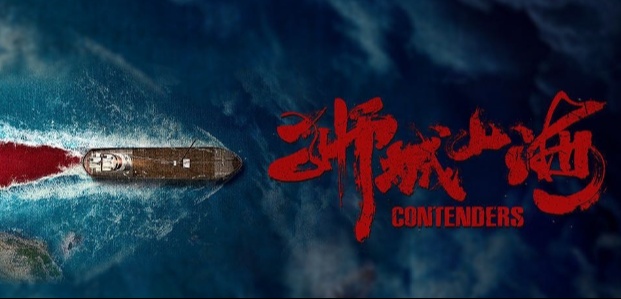
For example, the Lions Mountain Sea was broadcast in eight sets with a film-class sense, with a viewing rate of 1245 per cent, a viewing number exceeding 460 million, creating a record of the highest number since the micro-short play was on the screen; the Happy Family Together was shown in Hunan, near the people ‘ s lives, and the audience was five times as loyal as the average for the evening of the channel.
The “Small and Screen Connect” Micro-Syncs Industries
It is not an accident that the micro-short drama landed on television screens, but rather a corollary of the co-benefits of policy direction, market demand and industrial upgrading, whose development history and market resonance outline a clear mainstreaming path.
In an interview with the newspaper China Operator, Li Tao, the Cultural Director of Xi’an Fong, said that a growing number of micro-short dramas were on television, making their dissemination more accessible and more visible.
In his view, the presence of micro-short dramas on the screen reflects a dynamic and positive trend in the industry, especially when it comes to the news that “the marginal content of micro-short dramas has become the dominant way of entertainment”, which gives the practitioners greater confidence.
“At the policy and market levels, the content of future minilodies will be more refined. At the same time, there will be more multiplicity of types, especially in some of the broken tracks.” Li Totsu said, “This year has been a hot one, and this is a broken track of the short play, and there will be other tracks later”.
Li Guoxheng, Assistant Researcher at the University of Nanjing School of Literature, stated to journalists that behind the screens of the micro-short play was a multi-force collaborative drive. First, policy orientation plays a key role, such as the series of initiatives published by the National General Authority for Radio and Television (DGRT), which promote small and large screens and pave the way for micro-short dramas to enter television screens.
Second, market demand also constitutes an important push. On the one hand, television screens have rejuvenated under the policy effect of “two-governance” policies, and the tendency for users to return to the screen is evident; on the other hand, the long drama’s trend of “to short-lived” is highly compatible with the content characteristics of micro-short dramas, which further widens their dissemination.
An analysis of the impact of the “size-to-size screen connection”, according to Li Guoxheng, has multiple dimensions. The first is the strengthening of the role of cultural leadership, where television screens, as the dominant position of public opinion, are more ideological and artistic than content, forcing micro-features to jump out of the quagmire of “low, homogenous” creation.
The second is the re-engineering of the industrial value chain, with large-screen broadcasts promoting the upgrading of micro-short dramas from “products” to “works” and even “exposures”, leading to an overall increase in production costs, copyright prices and advertising values. The involvement of traditional video companies has led to a professional production team and a mature distribution system, freeing the micro-shorts from a single reliance on the flow platform.
Finally, the optimization of the audience structure and the enhancement of cultural identity, with a high percentage of people over 50 years of age among screen viewers, breaking the “intergenerational barriers” of the micro-short play, making it a choice of content for families to view together, and promoting intergenerational cultural exchange.
According to Li, in the future, industrial integration is expected to be deeper and more systematic. The “size screen connection” will move from simple text synchronization to co-creation, customizing content versions to different end-of-pipe characteristics to achieve the accurate dissemination of “one-source multiple screens ” . In the business model, multiple realization systems such as advertising, membership, IP derivatives, and offline consumption will be developed to build sustainable industrial closure.